Chinese Siheyuan: A Low Poly 3D Model for Your Projects
When you think of traditional Chinese architecture, the Siheyuan is often the first image that comes to mind. These courtyard homes are more than just buildings; they are cultural symbols representing family unity, harmony with nature, and a deep respect for history. If you are working on a digital project involving a Chinese village setting, adding an authentic Siheyuan can instantly elevate the visual storytelling. That is where this specific low poly model created in Blender becomes incredibly valuable.
This guide explores what makes the Siheyuan such a compelling subject for 3D artists and designers, and why having a ready-to-use, optimized model can save you time while delivering professional results. Whether you are a beginner learning Blender or a seasoned developer building a game environment, understanding the practical applications of this asset will help you make the most of your creative workflow.
Understanding the Appeal of the Siheyuan
A Siheyuan is a type of residence that consists of a group of buildings surrounding a central courtyard. Historically, these were common in northern China, particularly in Beijing. The layout is designed to create a private, inward-facing world, shielding the inhabitants from the outside noise and weather while maximizing sunlight and ventilation within the courtyard itself. This architectural style reflects Confucian values of hierarchy and family cohesion, as different rooms were assigned to family members based on their status.
For modern creators, the aesthetic appeal lies in its symmetry, simplicity, and organic feel. The wooden structures, tiled roofs, and enclosed courtyards provide a rich visual texture that feels grounded and realistic. However, recreating this level of detail from scratch can be time-consuming and computationally expensive. This is why a pre-made, optimized model is such a sought-after resource.
Why Choose a Low Poly Model?
In the world of 3D modeling, "low poly" refers to models with a reduced number of polygons (faces). While high-poly models offer intricate details suitable for close-up cinematic shots, low poly models are essential for real-time applications like video games, virtual reality, and mobile apps. They load faster, require less processing power, and allow for smoother performance without sacrificing the overall look.
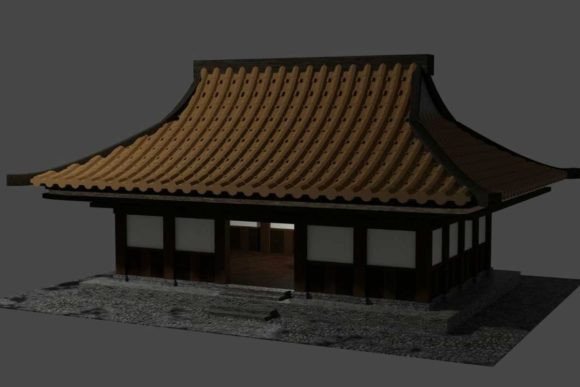
The model described here strikes an excellent balance between detail and efficiency. With a face count of approximately 48,056 and vertices around 49,140, it provides enough geometry to capture the essence of a traditional Siheyuan without overwhelming your system. This polygon count ensures that the model remains lightweight while still looking convincing in a broader scene.
Realistic Appearance Through Smart Design
One might assume that a low poly model would look blocky or simplistic, but this is not always the case. The creator of this Siheyuan model has designed it to look like a real Chinese Siheyuan by focusing on key architectural features. The roof lines, window placements, and wall structures are carefully crafted to mimic traditional designs. When rendered, even with simple lighting, the silhouette and proportions convey authenticity.
Preview images rendered with both Blender’s Eevee and Cycles engines demonstrate how versatile this model is. Eevee offers fast, real-time rendering that is great for previews and interactive applications, while Cycles provides ray-traced realism for high-quality stills or animations. Having preview renders in both engines gives you confidence in how the model will perform under different lighting conditions.
Technical Specifications and File Compatibility
One of the biggest challenges in 3D asset acquisition is compatibility. Different software tools require different file formats, and switching between them can sometimes lead to lost textures or broken materials. This pack addresses that issue by including a wide variety of file formats, ensuring that you can use the model in almost any pipeline.
- Blender (.blend): The native format for Blender v3.2.0, allowing you to edit the mesh directly if needed.
- FBX: A widely supported format used in many game engines like Unity and Unreal Engine.
- OBJ: A universal geometry format that preserves vertex positions and normals.
- STL: Ideal for 3D printing if you want to create a physical miniature of the Siheyuan.
- ABC (Alembic): Useful for complex simulations and animation pipelines.
- DAE (Collada): Another standard format for exchanging data between different 3D applications.
- glTF: The "JPEG of 3D," optimized for web-based applications and efficient loading.
This comprehensive list of formats means you don’t need to worry about conversion issues. You can drop the file into your project and start working immediately.
Materials and Textures: Simplicity Meets Flexibility
The pack includes twenty-one materials but no textures. At first glance, you might wonder why there are no textures included. However, this is actually a strategic advantage for many users. By providing base materials without baked textures, the model remains clean and easy to customize.
If you are using a texture painting workflow, you can apply your own hand-painted or photorealistic textures to the UV maps provided. If you prefer procedural materials, you can adjust the color and roughness settings in Blender to match your specific artistic vision. This flexibility allows the model to fit seamlessly into various environments, whether you are aiming for a stylized cartoon look or a gritty, realistic village setting.
Practical Use Cases for Creators
So, where can you use this Chinese Siheyuan model? The possibilities are vast, depending on your industry and interests.
Game Development
For indie developers or small teams, assets that are both visually appealing and performance-friendly are gold. This model is perfect for background elements in a RPG set in ancient China or as a detailed prop in a simulation game. Its low polygon count means you can place multiple instances in a scene without causing frame rate drops.
Architectural Visualization
Even if you are not an architect, clients often request historical reconstructions or cultural landmarks. This model serves as an excellent starting point for visualizing traditional housing styles. You can add vegetation, people, and other environmental details to create a complete scene for presentations or educational purposes.
Education and Cultural Preservation
Educators can use this 3D model to teach students about Chinese history and architecture. Interactive 3D models allow students to explore the structure from all angles, providing a deeper understanding than static images ever could. It brings history to life in a classroom setting.
Content Creation and Blogging
Bloggers and marketers creating content about travel, culture, or design can use high-quality renders of this model for thumbnails, headers, and illustrations. The clean geometry and realistic appearance ensure that your visuals stand out in a crowded digital landscape.
Important Considerations Before Using the Model
While this asset offers many benefits, there are a few things to keep in mind. First, always check the license agreement associated with the download. Ensure you have the right to use the model for your intended purpose, whether commercial or personal.
Second, remember that "no textures" means you may need to spend some time setting up the material nodes in Blender to get the desired look. If you are new to Blender, take advantage of the .blend file to study how the materials are structured. It can be a great learning opportunity to see how professional artists organize their scenes.
Finally, consider the scale of your project. While the model is optimized for low poly needs, ensure that the dimensions match your scene’s requirements. Most 3D packages allow you to resize objects easily, but starting with the correct scale can save adjustment time later.
Conclusion
The Chinese Siheyuan is a timeless symbol of architectural beauty and cultural heritage. By leveraging a well-crafted low poly model, you can bring this elegance into your digital projects with ease and efficiency. Whether you are building a game, designing a visualization, or simply exploring your creativity, this Blender asset provides a solid foundation. With its wide range of file formats and flexible material setup, it is a versatile tool for anyone looking to add a touch of traditional Chinese charm to their work.